

As a supplier of Security Cage Carts, I often receive inquiries about various features of our products, and one question that comes up frequently is about the water - resistance of these carts. In this blog post, I'll delve into what water - resistance means for a Security Cage Cart, how it's achieved, its importance, and some factors that can affect it.
What is Water - Resistance in a Security Cage Cart?
Water - resistance refers to the ability of a Security Cage Cart to withstand the effects of water to some degree without being significantly damaged or having its functionality impaired. It doesn't mean the cart is completely waterproof; that is a more extreme property. A water - resistant Security Cage Cart can handle exposure to moisture, light splashes, and in some cases, brief submersion or heavy humidity without rusting, corroding, or having its structural integrity compromised.
How is Water - Resistance Achieved?
Material Selection
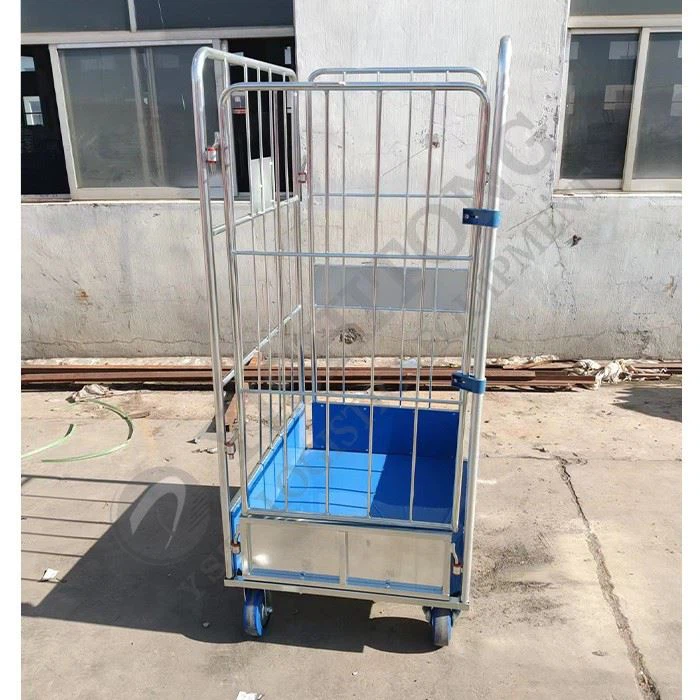
The choice of materials plays a crucial role in determining the water - resistance of a Security Cage Cart. At our company, we often use galvanized steel or stainless steel. Galvanized steel has a protective zinc coating that acts as a barrier against water and oxygen, preventing rust from forming on the underlying steel. Stainless steel, on the other hand, contains chromium, which forms a passive oxide layer on the surface when exposed to oxygen. This layer is self - healing and highly resistant to corrosion, making stainless steel an excellent choice for applications where water exposure is common.
For the mesh and wire components of the cage, we also select high - quality materials. These meshes are often treated to enhance their water - resistance. For example, some meshes are powder - coated, which not only adds a layer of protection against water but also gives the cart a more aesthetically pleasing appearance.
Design Considerations
The design of the Security Cage Cart also contributes to its water - resistance. A well - designed cart will have proper drainage holes. These holes allow water to escape quickly, preventing it from pooling inside the cart. When water accumulates, it can lead to corrosion over time, especially in the joints and corners of the cart.
The joints and connections of the cart are also designed to be water - resistant. We use techniques such as welding and sealing to ensure that water cannot seep into the internal parts of the cart through these areas. Additionally, the wheels and axles are often protected with covers or made from materials that are resistant to water damage, ensuring smooth operation even in wet conditions.
Importance of Water - Resistance
Durability
One of the primary reasons for having a water - resistant Security Cage Cart is to increase its durability. In many industrial and commercial settings, the carts are exposed to various environmental conditions. For example, in a warehouse near a loading dock, the carts may be exposed to rain when the dock doors are open. In a food processing facility, the carts may come into contact with water during the cleaning process. Without proper water - resistance, these carts would be prone to rust and corrosion, which would significantly reduce their lifespan.
Hygiene
In industries such as food and beverage, healthcare, and pharmaceuticals, hygiene is of utmost importance. A water - resistant cart can be easily cleaned with water and disinfectants without the risk of rust or corrosion. This helps to maintain a clean and sanitary environment, which is essential for preventing the spread of bacteria and other contaminants.
Functionality
Water can also affect the functionality of a Security Cage Cart. For example, if water seeps into the locking mechanism or the wheels, it can cause them to malfunction. A water - resistant design ensures that the cart continues to operate smoothly, even in wet conditions.
Factors Affecting Water - Resistance
Exposure Time
The longer a Security Cage Cart is exposed to water, the greater the risk of damage. Brief splashes or occasional exposure to light rain may not have a significant impact on a water - resistant cart. However, continuous immersion or long - term exposure to high humidity can test the limits of its water - resistance. In such cases, additional protective measures may be required.
Water Quality
The quality of the water also matters. Water that contains chemicals, salt, or minerals can be more corrosive than pure water. For example, in coastal areas, the salt in the air and water can accelerate the corrosion process. If the carts are used in such environments, special coatings or materials may be needed to enhance their water - resistance.

Maintenance
Proper maintenance is essential for maintaining the water - resistance of a Security Cage Cart. Regular cleaning and inspection can help to identify and address any signs of damage or corrosion early on. For example, if the powder coating on the cart is scratched, it should be repaired promptly to prevent water from reaching the underlying metal.
Related Products
If you're interested in other types of carts, we also offer Industrial Laundry Cart, Rolling Laundry Cart with Wheels, and Folding Rolling Laundry Cart. These carts are also designed with high - quality materials and advanced manufacturing techniques to ensure durability and functionality.
Contact Us for Procurement
If you're in the market for Security Cage Carts or any of our other products, we'd love to talk to you. Our team of experts can help you select the right cart for your specific needs, considering factors such as water - resistance, load capacity, and maneuverability. Whether you're an industrial facility, a commercial business, or a healthcare provider, we have the solutions to meet your requirements.
If you have any questions or would like to request a quote, please don't hesitate to reach out. We're committed to providing high - quality products and excellent customer service. Start a conversation with us today and let's find the perfect cart for your business!
References
- ASTM International. (Year). Standard practices for testing corrosion resistance of metals.
- Steel Construction Institute. (Year). Guide to corrosion protection in steel structures.
- International Association for Food Protection. (Year). Hygiene guidelines for food processing equipment.