

In warehouses and manufacturing facilities, moving goods from one location to another can take up a surprising amount of time. Repeated carrying, disorganized materials, and inefficient internal transport can slow daily operations. A 2 sided roll container offers a practical way to organize goods and move them between work areas.
A 2 sided roll container is a wheeled material handling unit with two side panels designed to help hold and transport goods. It is commonly used in warehouses, manufacturing plants, distribution centers, retail stores, and logistics operations. Its open design can make loading and unloading convenient, while its wheeled base helps workers move goods between storage areas, production stations, and dispatch points.
To understand whether this equipment suits your operation, it helps to look at its structure, everyday applications, material options, and selection criteria.
What Is a 2 Sided Roll Container?
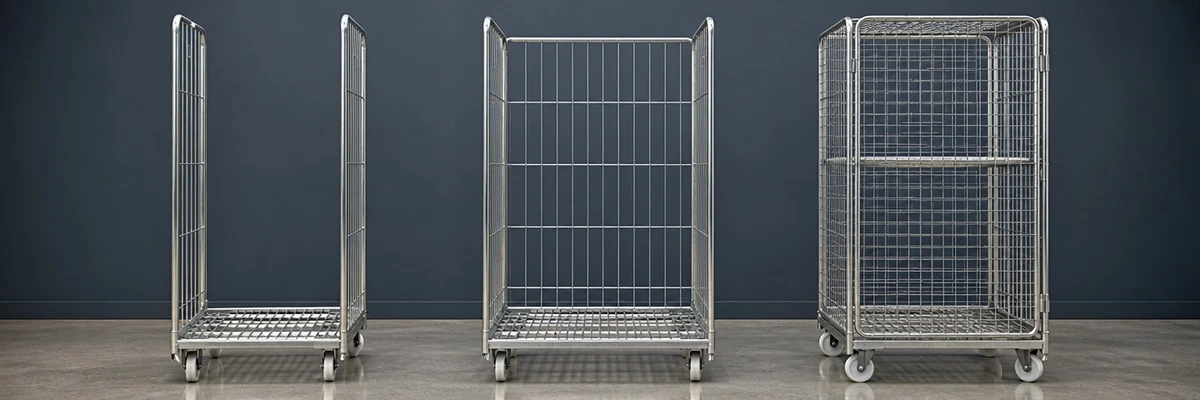
A 2 sided roll container is a mobile storage and transport unit typically consisting of a base platform, wheels, and two upright side panels. Depending on the design, the panels may be made from metal mesh or other suitable steel structures. The open sides allow access to goods from multiple directions.
Unlike a fully enclosed roll container, a two-sided model provides less surrounding containment. This can be useful when workers need to load, unload, or access goods frequently. However, the right configuration depends on the size, shape, stability, and handling requirements of the items being transported.
Common components may include:
- Steel base: Supports the goods during movement.
- Two side panels: Help keep items within the designated loading area.
- Wheels or castors: Allow the container to move between workstations and storage areas.
- Optional features: Depending on the model, these may include shelves, brakes, removable components, or customized dimensions.
Exact features, dimensions, and load ratings vary by product. Buyers should confirm the manufacturer's specifications before selecting a unit for a particular task.

How Is a 2 Sided Roll Container Different from Other Roll Containers?
The number of side panels affects how goods are loaded, accessed, and contained. A two-sided design is not automatically better than a three-sided or four-sided model. The most suitable option depends on the workflow.
2 Sided vs. 3 Sided Roll Containers
A two-sided roll container has two side panels, leaving more sides open for access. This can be useful when workers need to load items from different directions or transfer goods quickly between work areas.
A three-sided roll container has an additional panel that provides more lateral containment. It may be more suitable when goods need extra support during movement, depending on their shape and how they are arranged.
For operations that prioritize access and frequent handling, a two-sided design may be worth considering. When the load needs more surrounding support, a three-sided model may be more appropriate.
For a more detailed comparison, see YSTrolley's guide to 2-sided and 3-sided roll containers.
2 Sided vs. 4 Sided Roll Containers
A four-sided roll container provides more enclosure around the load. This can help contain a wider range of items during movement, particularly when goods might shift or fall from an open side.
A two-sided model offers easier access from its open sides, which can be helpful for repeated loading and unloading. The trade-off is that operators must consider whether the goods can be transported safely without additional containment.
Before choosing either design, assess the dimensions and stability of your goods, the route the container will travel, and whether the load needs extra restraints.
How Can a 2 Sided Roll Container Help in Daily Operations?
The value of a roll container is not limited to moving products. When selected and used appropriately, it can help organize materials, support repeatable handling processes, and reduce unnecessary carrying between work areas.
1. Moving Materials Between Production Stations
In a manufacturing plant, materials often move through several stages before becoming finished products. Components may need to travel from a storage area to an assembly station, inspection area, packing line, or temporary holding point.
A two-sided roll container can bring multiple items together on one mobile unit. Instead of carrying each item separately, workers can load a suitable quantity and move it to the next workstation.
For example, an assembly team may use a roll container to transport components from a central store to a production cell. After the components have been used, the same unit may be returned for replenishment, if the workflow and container design allow it.
This can help teams organize material deliveries and reduce repeated trips. The actual time saved will depend on travel distance, load size, replenishment frequency, and the layout of the facility.
2. Supporting Warehouse Picking and Replenishment
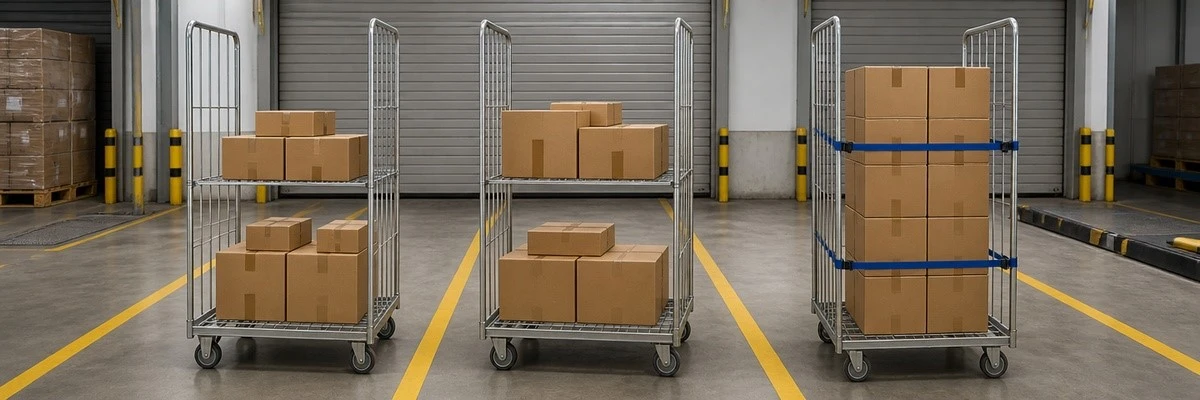
Warehouse employees often collect items from different shelves or storage locations before moving them to packing or dispatch areas. A roll container can provide a mobile place to gather selected goods during this process.
For replenishment tasks, workers may load products or supplies onto a container and transport them to the relevant storage or picking area. This can make it easier to move several items together rather than carrying them individually.
The open sides of a two-sided design may also provide convenient access when workers need to add or remove goods frequently. However, items should be arranged securely, and the container should not be overloaded.

3. Organizing Goods for Sorting and Dispatch
Distribution centers and logistics facilities frequently handle goods that must be separated by destination, delivery route, order, or processing stage.
A roll container can serve as a temporary mobile holding unit while items wait for their next step. For example, staff may group suitable parcels or products together before transferring them to a dispatch area.
This approach can help make goods easier to identify and move through the facility. If multiple containers are used, clear labels or workflow-specific identification can help staff distinguish between orders or destinations.
A two-sided design may be useful when operators need frequent access to the load. For small, loose, or unstable items, additional bins, shelves, restraints, or a more enclosed container may be necessary.
4. Reducing Repeated Manual Carrying
Repeatedly carrying goods by hand can make internal transport time-consuming, particularly when materials must travel between distant work areas.
A wheeled roll container allows workers to move a suitable load together rather than carrying each item separately. This can support a more organized material handling process and may reduce some unnecessary manual carrying.
The benefits depend on the weight and dimensions of the goods, the condition of the floor, the wheel configuration, the travel distance, and safe operating practices. Employees should follow the facility's manual handling procedures and the equipment's rated load limits.
For general workplace guidance, consult the UK Health and Safety Executive's manual handling resources.
5. Supporting More Organized Internal Material Flow
When each department has a clear method for receiving and transferring goods, materials can be easier to track and handle. Roll containers can be assigned to particular tasks, locations, or stages of a production process.
For example, a factory might use separate containers for incoming components, work-in-progress materials, finished products, and packaging supplies. This arrangement can help employees understand where items belong and where they need to go next.
The equipment alone will not solve workflow problems. It works best when combined with clear labeling, sensible loading rules, designated parking areas, and an agreed process for returning empty containers.
Where Are 2 Sided Roll Containers Commonly Used?
Warehouses and Distribution Centers
Warehouses may use two-sided roll containers for order picking, stock replenishment, internal transfers, and temporary storage of goods awaiting processing. Their mobility can help workers move suitable loads between storage zones and dispatch areas.
Manufacturing Plants and Production Lines
In production environments, these containers can support the movement of components, tools, packaging materials, and work-in-progress items. Buyers should check whether the container's dimensions and load rating suit the production layout and the goods being handled.
Retail Stores and Supermarkets
Retail teams may use roll containers to transfer stock from receiving areas to storage rooms or sales floors. The open design can make access convenient when items are loaded and unloaded frequently.
The specific model should match the products being transported. Fragile goods, loose items, and products with unusual dimensions may need additional support or a different container design.
Logistics and Parcel Handling
Logistics companies may use roll containers to organize suitable shipments before sorting, staging, or dispatch. Container labels and consistent loading procedures can help teams separate goods by route, destination, or handling requirement.
For any application, operators should verify that the container is appropriate for the goods and operating environment rather than assuming one configuration will work for every task.
Why Do Material and Surface Treatment Matter?
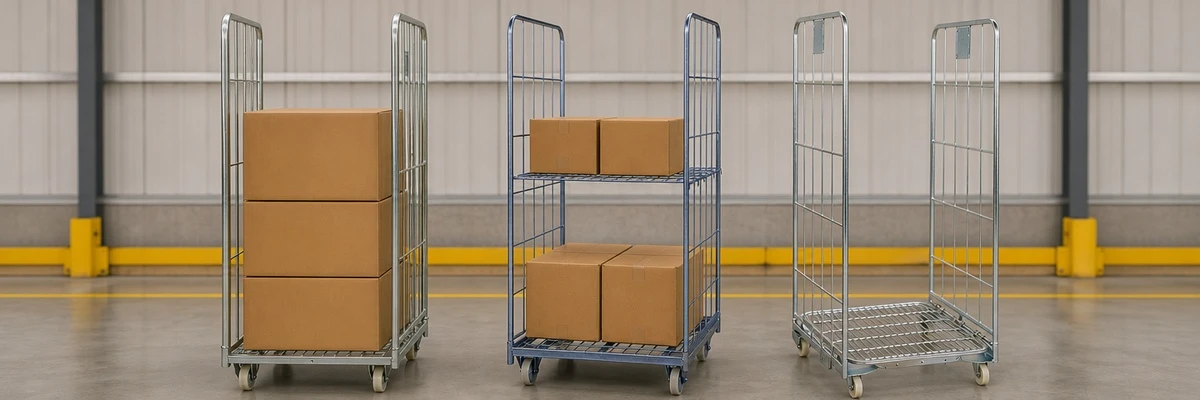
For B2B buyers, a roll container's material and surface treatment are important purchasing considerations. They influence the product's suitability for its intended environment, maintenance requirements, appearance, and resistance to corrosion.
Mild Steel Q235
Q235 mild steel is a commonly specified structural steel grade. When used in a roll container, the suitability of the material depends on the product's design, component dimensions, fabrication quality, and intended load.
Buyers should evaluate the complete unit rather than judging performance from the steel grade alone. The base structure, joints, welds, wheels, and overall construction also matter.
If the container will carry heavy or awkward loads, confirm the rated capacity and any operating restrictions with the manufacturer.
Powder-Coated Roll Containers
Powder coating applies a protective and decorative finish to prepared metal surfaces. It can provide a consistent appearance and a useful protective layer for equipment used in suitable indoor environments.
The final result depends on surface preparation, coating quality, coverage, and operating conditions. Buyers should discuss the expected environment and finish requirements when requesting a quotation.
Zinc-Galvanized Roll Containers
Zinc galvanizing provides a zinc coating intended to help protect steel against corrosion. The exact process and resulting coating characteristics should be confirmed with the supplier.
When evaluating a zinc-galvanized model, consider where the container will be used, how frequently it will be cleaned, and whether the environment exposes it to moisture or corrosive substances.
Hot-Dip Galvanized Roll Containers
Hot-dip galvanizing involves immersing prepared steel components in molten zinc to form a zinc coating. It may be considered for applications where corrosion protection is an important requirement.
However, performance depends on the coating specification, fabrication details, handling conditions, and exposure environment. Buyers should confirm whether the finish is suitable for their particular application instead of relying on a general claim that one treatment is always superior.
When comparing powder coating, zinc galvanizing, and hot-dip galvanizing, consider the working environment, expected maintenance, appearance requirements, budget, and the supplier's available specifications.

How to Choose the Right 2 Sided Roll Container
Before placing an order, buyers should compare the product's specifications with the actual tasks it will perform.
Check Dimensions and Load Capacity
Measure the goods, aisles, doorways, workstations, and storage areas involved. The container must fit the operating space while providing enough room for the intended load.
Confirm the manufacturer's rated load capacity. Do not assume that two containers with similar dimensions can carry the same weight.
Consider the Type and Size of Goods
Think about whether the container will carry cartons, components, packaged products, supplies, or other materials. Consider item stability, center of gravity, and the risk of goods shifting during movement.
If the load requires more containment than two side panels provide, ask whether additional accessories or a different configuration would be more suitable.
Choose the Right Surface Treatment
Match the finish to the working environment and maintenance requirements. Indoor warehouse use may have different needs from areas exposed to moisture or other challenging conditions.
Describe the actual application to the supplier and request relevant coating or galvanizing specifications before ordering.
Check Wheels and Maneuverability
Wheel type, diameter, material, and configuration can affect how easily the container moves. Consider floor conditions, thresholds, turning space, travel distance, and whether brakes are required.
A container that works well on a smooth warehouse floor may behave differently on uneven surfaces or in tight production areas.
Discuss Customization and Bulk Order Requirements
For larger orders, buyers may need specific dimensions, panel arrangements, finishes, wheels, or other features. Confirm which options the manufacturer can provide and whether the specifications can be kept consistent across the order.
A clear request should include the intended application, estimated quantity, dimensions, load requirements, surface treatment, delivery destination, and any relevant packaging needs.
What Should Bulk Buyers Look for in a Roll Container Supplier?
For distributors, warehouse operators, and logistics companies, purchasing decisions involve more than the unit price. Product suitability, specification consistency, and communication throughout the order process are also important.
When evaluating a supplier, consider the following:
- Product specifications: Request confirmed dimensions, load ratings, materials, and finish details.
- Manufacturing consistency: Discuss how the supplier maintains consistent specifications across repeat orders.
- Customization options: Confirm whether the design can be adapted to your handling process.
- Surface treatment: Specify the required finish and clarify how it will be applied.
- Packaging and shipping: Check how the units will be packed, protected, and prepared for transportation.
- Quotation details: Make sure the quotation identifies the agreed configuration, quantity, finish, and delivery terms.
Providing detailed requirements at the quotation stage helps reduce misunderstandings and makes supplier comparisons more meaningful.
If you are sourcing two-sided roll containers for warehouse, manufacturing, or logistics use, you can explore YSTrolley's website and contact the team to discuss your application and product requirements.
Frequently Asked Questions
What Is the Main Advantage of a 2 Sided Roll Container?
Its open-sided configuration can make goods easier to access from different directions, while the wheeled base supports movement between work areas. Whether this design is suitable depends on the load and the amount of containment required.
Is a 2 Sided Roll Container Suitable for a Production Line?
It can be suitable for moving components, supplies, packaging materials, and other appropriate goods between production stations. Buyers should check dimensions, load capacity, access requirements, and whether the load needs additional containment.
Which Surface Treatment Is Best for a Roll Container?
There is no single best finish for every application. Powder coating, zinc galvanizing, and hot-dip galvanizing have different characteristics. The choice should reflect the working environment, corrosion exposure, maintenance needs, appearance requirements, and supplier specifications.
What Should I Check Before Ordering Roll Containers in Bulk?
Confirm the dimensions, rated load capacity, steel specification, surface treatment, wheel configuration, quantity, customization requirements, packaging, and delivery terms. A clearly documented specification helps ensure that the ordered equipment matches your intended use.
Conclusion
A 2 sided roll container can help businesses organize goods, move materials between work areas, and support daily warehouse, production, and distribution tasks. The right choice depends on the load, workflow, dimensions, wheels, and surface treatment. By defining these requirements before ordering, buyers can select equipment that better fits their operation and purchasing needs.


