

As a supplier of Roll Cage Pallets, one of the most common questions I receive from customers is whether these pallets are compatible with all types of forklift attachments. This is a crucial query, as the compatibility between roll cage pallets and forklift attachments can significantly impact the efficiency and safety of material handling operations. In this blog post, I will delve into this topic, exploring the factors that affect compatibility and providing insights to help you make informed decisions for your business.
Understanding Roll Cage Pallets
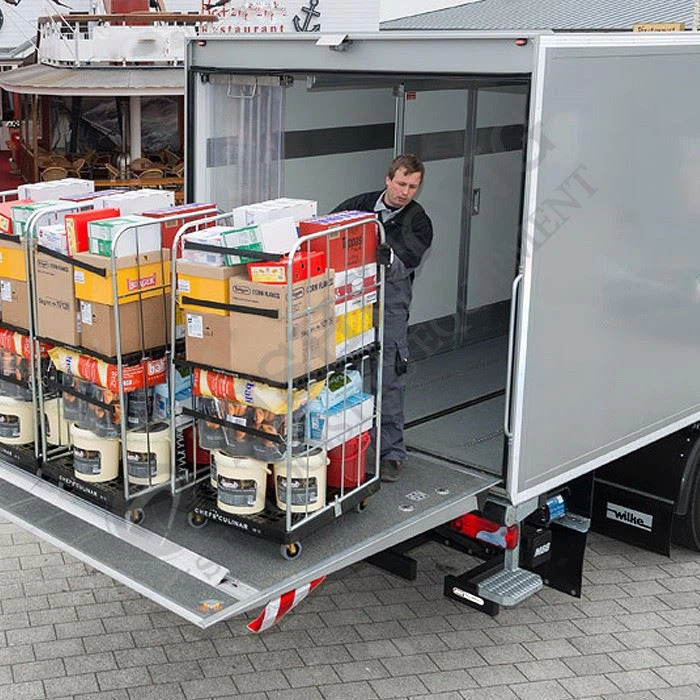
Roll cage pallets are versatile storage and transportation solutions widely used in various industries, including warehousing, logistics, manufacturing, and retail. They are designed to securely hold and transport goods, providing protection and stability during handling and movement. Roll cage pallets typically feature a robust steel frame with mesh or solid panels, offering visibility and ventilation while preventing items from falling out.
One of the key advantages of roll cage pallets is their mobility. They are equipped with wheels or casters, allowing them to be easily moved around the warehouse or facility using a forklift or other material handling equipment. This mobility makes them ideal for applications where goods need to be transported between different areas or loaded onto trucks for distribution.
Types of Forklift Attachments
Forklifts are essential equipment in material handling operations, and they can be equipped with a variety of attachments to enhance their functionality and versatility. Some of the most common types of forklift attachments include:
- Fork Extensions: These attachments are used to increase the length of the forklift forks, allowing them to handle longer or wider loads. Fork extensions are particularly useful when dealing with oversized or irregularly shaped items.
- Side Shifters: Side shifters enable the forklift operator to move the forks horizontally without having to reposition the entire forklift. This feature improves productivity by allowing for more precise placement of loads and reduces the need for excessive maneuvering.
- Clamps: Clamps are used to grip and hold loads securely, eliminating the need for pallets or other support structures. They are commonly used for handling items such as barrels, drums, and boxes that do not have a standard pallet base.
- Rotators: Rotators allow the forklift operator to rotate the load by 360 degrees, providing greater flexibility in positioning and unloading. This attachment is particularly useful for applications where items need to be dumped or emptied.
- Push-Pull Attachments: Push-pull attachments are designed to handle loads that are placed on slip sheets instead of pallets. They work by pushing the load off the slip sheet and onto the desired location, eliminating the need for pallet handling.
Compatibility Factors
The compatibility between roll cage pallets and forklift attachments depends on several factors, including the design and dimensions of the pallets, the type and specifications of the forklift attachments, and the specific requirements of the material handling operation. Here are some key factors to consider:
- Pallet Design: The design of the roll cage pallet plays a crucial role in determining its compatibility with forklift attachments. Some pallets may have a specific shape or configuration that makes them more suitable for certain types of attachments. For example, pallets with a wide base may be more stable when used with fork extensions, while pallets with a narrow profile may be better suited for side shifters.
- Forklift Attachment Specifications: Each forklift attachment has its own set of specifications, including load capacity, fork size, and mounting requirements. It is important to ensure that the attachment is compatible with the forklift and the roll cage pallets in terms of these specifications. For example, if the attachment has a limited load capacity, it may not be able to handle the weight of the loaded roll cage pallet.
- Load Characteristics: The characteristics of the load being transported, such as its size, weight, and shape, can also affect the compatibility between roll cage pallets and forklift attachments. For example, if the load is heavy or bulky, it may require a more robust attachment or a larger forklift to handle it safely.
- Material Handling Operation: The specific requirements of the material handling operation, such as the frequency of use, the type of environment, and the distance of transportation, can also influence the choice of forklift attachments and the compatibility with roll cage pallets. For example, if the operation involves frequent loading and unloading of pallets, a side shifter or a push-pull attachment may be more efficient.
Compatibility Examples
To illustrate the compatibility between roll cage pallets and forklift attachments, let's consider some common scenarios:
- Fork Extensions: Fork extensions can be used with roll cage pallets to handle longer loads or to increase the stability of the pallet during transportation. However, it is important to ensure that the extensions are properly installed and that the load is evenly distributed across the forks to prevent tipping or damage to the pallet.
- Side Shifters: Side shifters are highly compatible with roll cage pallets, as they allow for precise positioning of the forks without having to reposition the entire forklift. This feature is particularly useful when loading or unloading pallets in tight spaces or when dealing with multiple pallets at once.
- Clamps: Clamps can be used with roll cage pallets to handle loads that do not have a standard pallet base, such as barrels or drums. However, it is important to ensure that the clamp is properly adjusted to fit the size and shape of the load and that the pallet is designed to withstand the clamping force.
- Rotators: Rotators can be used with roll cage pallets to rotate the load by 360 degrees, providing greater flexibility in positioning and unloading. This attachment is particularly useful for applications where items need to be dumped or emptied, such as in waste management or recycling operations.
- Push-Pull Attachments: Push-pull attachments are designed to handle loads that are placed on slip sheets instead of pallets. While roll cage pallets are typically used with pallets, they can also be adapted to work with push-pull attachments by using a special adapter or by modifying the pallet design.
Conclusion
In conclusion, roll cage pallets can be compatible with a wide range of forklift attachments, but the compatibility depends on several factors, including the design and dimensions of the pallets, the type and specifications of the forklift attachments, and the specific requirements of the material handling operation. By considering these factors and choosing the right combination of pallets and attachments, you can enhance the efficiency and safety of your material handling operations.
As a supplier of Roll Cage Pallets, I offer a wide range of products that are designed to be compatible with various forklift attachments. Our Two-sided Roll Cage Trolley, Rolling Security Cage, and 3 Side Roll Cage are all built to high standards of quality and durability, ensuring reliable performance in your material handling operations.

If you have any questions or need further information about the compatibility of our roll cage pallets with forklift attachments, please do not hesitate to contact us. Our team of experts is always ready to assist you in finding the right solutions for your business. We look forward to the opportunity to discuss your requirements and explore how our products can meet your needs.
References
- "Forklift Attachments: A Guide to Choosing the Right One." Material Handling Equipment Magazine, 2023.
- "Roll Cage Pallets: Benefits and Applications." Logistics Management Journal, 2022.
- "Compatibility of Pallets and Forklift Attachments." Industrial Engineering Review, 2021.