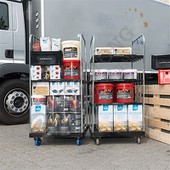
Foldable cage trolleys, play a vital role in warehouses, retail environments, logistics, and manufacturing facilities. While they enhance productivity by making it easier to transport goods, safety remains a critical factor in their design and use.
Modern cage trolleys are equipped with a range of safety features to protect both the goods being transported and the workers operating them. These features make the trolleys indispensable tools across industries.
This article explores the key safety features available on roll containers, their benefits, and tips for ensuring optimal safety in the workplace.
Key Safety Features on Trolleys
1. Braking Systems
Many roll containers, especially those used on inclines or in busy environments, are equipped with braking systems to prevent unintended movement.
Foot-Operated Brakes: Allow operators to lock the trolleys in place while loading or unloading.
Benefits:
Prevent accidents caused by runaway cage trolleys.
Ensure stability during loading and unloading.
2. Load Restraint Systems
To secure goods during transit, many cages come with features that prevent items from shifting or falling.
Examples of Load Restraint Systems:
Texitle straps and Cords: Secure goods to the frame of the containers.
Mesh or Solid Panels: Prevent items from slipping out, especially on open-sided roll cage trolleys.
Adjustable Shelving: Keeps items organized and stable.
Benefits:
Prevents damage to goods transported in the trolleys.
Minimizes the risk of injuries caused by falling items.
3. High-Quality Wheels
Wheels are one of the most critical components of cage trolleys when it comes to safety.
Safety Features of Wheels:
Swivel Wheels: Enhance maneuverability, especially in tight spaces.
Braked Wheels: Allow foldable cage trolleys to stay stationary during loading or unloading.
Shock-Absorbing Wheels: Provide stability on uneven surfaces, reducing vibrations that could dislodge items.
Benefits:
Prevent tipping or instability of the trolleys.
Improve handling on different terrains.
4. Anti-Tip Design
Trolleys carrying heavy or unevenly distributed loads can tip over if not designed properly. Anti-tip features prevent this risk.
Key Anti-Tip Features:
Low Center of Gravity: Ensures stability when the containers are fully loaded.
Wide Wheel Base: Improves balance and reduces the likelihood of tipping.
Benefits:
Enhances stability during transport.
Protects both workers and goods.
5. Weather Resistance
For roll containers used outdoors, weather resistance is an important safety feature.
Weather-Resistant Features:
Rust-Proof Coatings: Protect metal components from corrosion.
Waterproof Surface Treatment: Prevents damage to goods in wet conditions.
Benefits:
Ensures long-term durability of heavy-duty cage trolleys.
Maintains safety even in adverse weather conditions.
Benefits of Safety Features on Trolleys
Equipping trolleys with advanced safety features offers several advantages:
Reduced Workplace Accidents: Prevent injuries by enhancing control, stability, and visibility.
Protection for Goods: Minimize damage to transported items, saving costs.
Increased Productivity: Workers can operate the containers more efficiently with safety features that improve ease of use.
Compliance with Safety Standards: Meet industry regulations for workplace safety, avoiding fines or legal issues.
Tips for Ensuring Optimal Safety with Trolleys
To maximize the effectiveness of safety features on cage trolleys, follow these tips:
1. Perform Regular Maintenance
Inspect brakes, wheels, and handles regularly to ensure they are in good condition. Address wear and tear promptly to prevent failures.
2. Train Employees
Provide workers with training on how to use containers safely, including loading techniques and proper handling procedures.
3. Avoid Overloading
Adhere to the manufacturer's weight capacity specifications to prevent tipping or structural damage to roll containers.
4. Use the Right Trolley for the Job
Select trolleys with appropriate features for specific tasks, such as shock-absorbing wheels for rough surfaces or load restraints for fragile goods.
5. Optimize Workplace Layout
Ensure pathways are clear and free from obstacles to allow the trolleys to move safely.
Industries That Benefit from Trolley Safety Features
Safety features make nestable roll containers indispensable in various industries:
1. Warehousing and Logistics
Use heavy-duty roll containers with braked wheels and anti-tip designs for moving heavy pallets.
Employ reflective strips in busy loading docks to prevent accidents.
2. Retail and E-Commerce
Utilize nestable cage trolleys with locks and wire meshes to transport goods in-store or in distribution centers.
3. Food and Beverage
Opt for rust-proof and waterproof cage trolleys to handle perishable goods in wet or cold environments.
4. Manufacturing
Use load restraint systems and high-capacity roll containers for transporting heavy machinery or parts.
Conclusion
Modern nestable roll containers, are designed with safety as a top priority. From braking systems and anti-tip designs to load restraints and weather-resistant features, these trolleys ensure safe and efficient operations across industries.
By selecting the right trolley with the appropriate safety features and maintaining them properly, businesses can protect their workers, reduce costs, and enhance productivity.
FAQs About Trolley Safety Features
1. Why are braking systems important for trolley safety?
Braking systems prevent cage trolleys from rolling away during loading or unloading, reducing the risk of accidents.
2. How do anti-tip features enhance safety?
Anti-tip designs, such as low centers of gravity and wide wheelbases, provide stability and prevent the trolleys from toppling over.
3. Can safety features be added to existing trolleys?
Yes, many features like straps, and reflective strips can be retrofitted to enhance the safety of standard roll containers.
4. What is the ideal wheel type for trolleys?
Rubber or polyurethane wheels with braking mechanisms and shock absorption are ideal for smooth and safe movement across various surfaces.